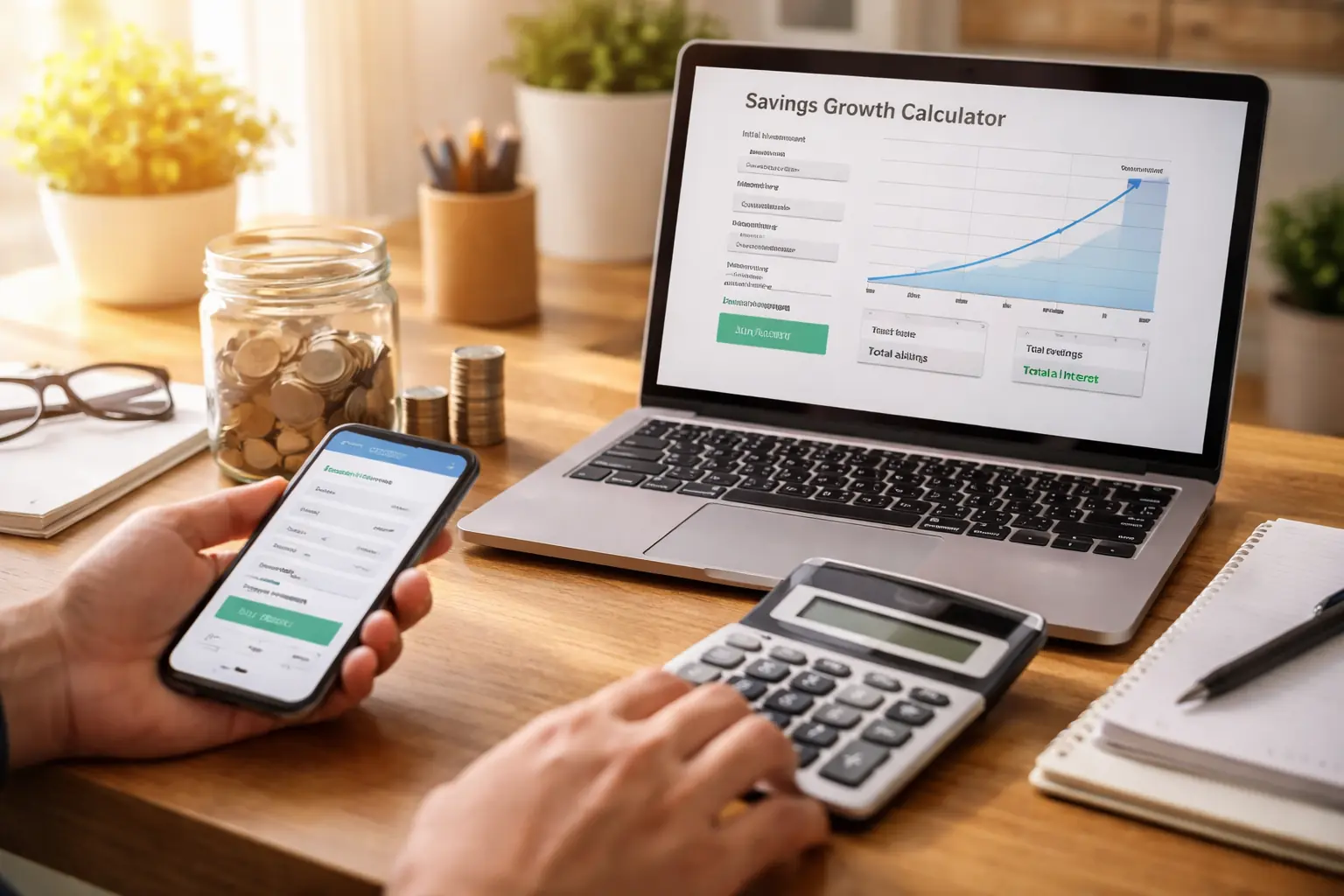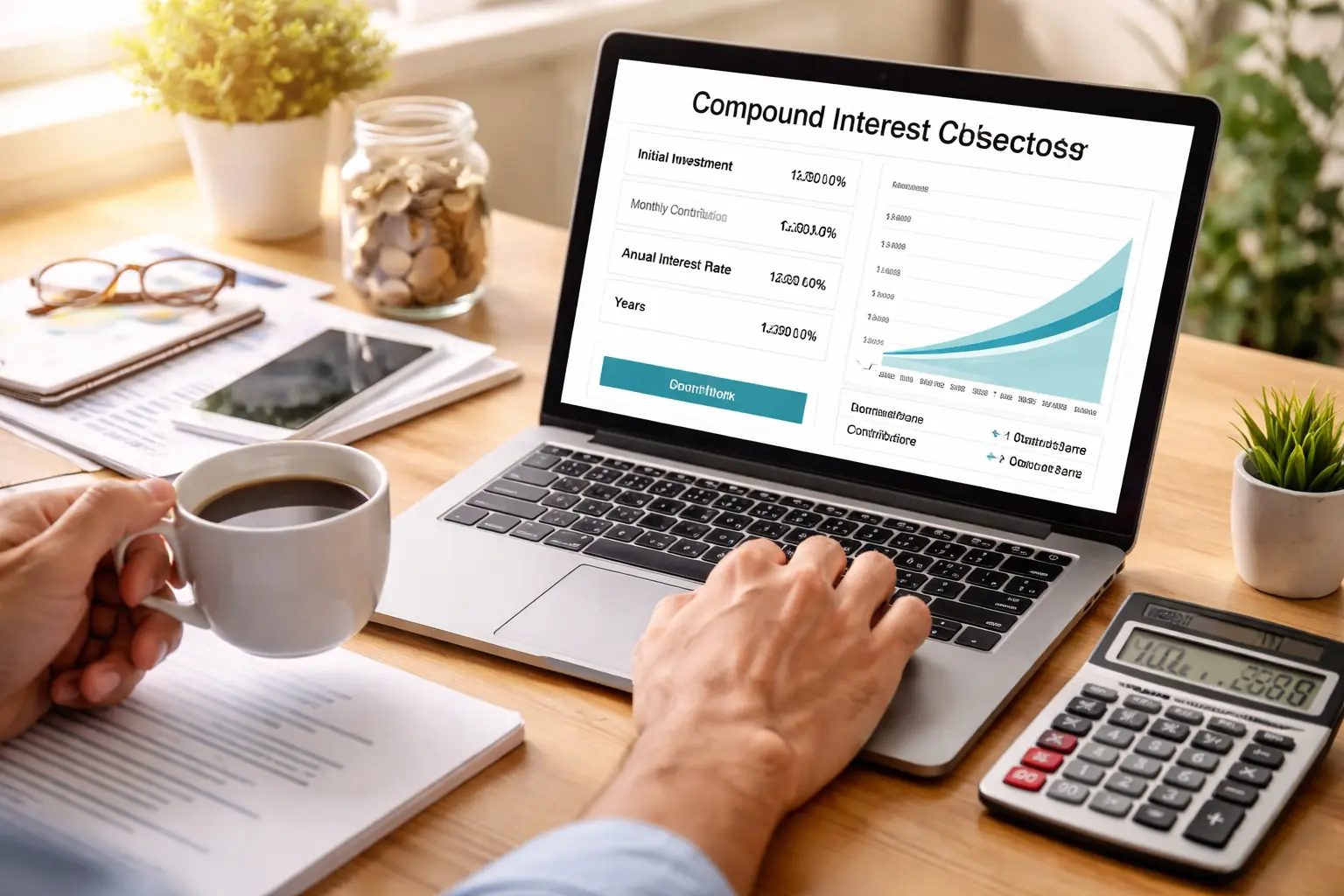
Compound interest, a fundamental principle that can transform your financial future, is not only a concept for financial experts to understand. This powerful concept, often dubbed the “eighth wonder of the world” by Albert Einstein, allows your initial investment to grow, and then the earnings from that investment also begin to earn, creating a snowball effect. Mastering its application, especially through the smart use of a compound interest calculator, is a key to unlocking substantial wealth over time.

Understanding Compound Interest: A Key to Maximizing Savings
At its core, compound interest is interest earned on interest. Instead of simply calculating interest on your initial principal amount, compound interest takes into account the accumulated interest from previous periods as well. This subtle yet profound difference is what makes it such a potent force for wealth creation.
The Mechanics of Compounding
Imagine you invest $1,000 at a 5% annual interest rate. With simple interest, after one year, you’d earn $50, and after ten years, you’d have $1,500 ($1,000 principal + 10 x $50 interest). However, with compound interest, that initial $50 earned in the first year is added to your principal, making your new principal $1,050 for the second year. In the second year, you’d earn 5% on $1,050, which is $52.50. This continuous cycle of earning interest on your growing balance creates an exponential growth trajectory that simple interest simply cannot match. The longer your money compounds, the more dramatic the results become.
The Benefits of Using a Compound Interest Calculator
While the concept of compound interest is straightforward, calculating its precise impact over various timeframes and with different contributions can become complex. This is where a compound interest calculator comes in handy. It eliminates uncertainty from financial planning and offers precise, practical insights.
Visualizing Future Wealth
One of the most significant benefits of a compound interest calculator is its ability to visualize your future wealth. By inputting your initial investment, regular contributions, interest rate, and investment horizon, the calculator can project how much your savings will grow. This tangible representation of your financial future can be incredibly motivating, helping you stay committed to your savings goals. It transforms abstract numbers into concrete potential, showing you the real power of consistent saving.
Comparing Different Scenarios
A calculator allows you to easily compare different financial scenarios. What if you save an extra $50 per month? How might a 1% increase in interest rate affect your overall savings? Or what if you started saving five years earlier? By experimenting with these variables, you can make informed decisions about your savings strategy. This comparative analysis is important for improving your approach and identifying the most impactful adjustments you can make.
How to Calculate Compound Interest for Different Savings Goals
Whether you’re saving for a down payment on a house, your child’s education, or a comfortable retirement, a compound interest calculator can be tailored to meet a diverse range of financial aspirations.
Planning for Short-Term vs. Long-Term Goals
For short-term goals, such as saving for a vacation within a few years, the impact of compound interest might be less dramatic but still beneficial. For long-term goals, like retirement, the calculator truly shines, showcasing the immense power of time. By breaking down your long-term goals into smaller, manageable targets, the calculator can help you track your progress and make necessary adjustments along the way. It helps you understand how consistent effort over a prolonged period can lead to significant accumulation.
Incorporating Regular Contributions
Most individuals do not simply invest a single lump sum and disregard it. Regular contributions are a cornerstone of effective saving. A good compound interest calculator will allow you to input both an initial principal and a recurring contribution amount (e.g., monthly, quarterly, annually). This feature is vital for accurately modeling real-world savings scenarios and demonstrating the added benefit of consistent infusions of capital. The more you contribute, and the earlier you start, the more opportunity your money has to compound.
Tips for Using a Compound Interest Calculator Effectively
To get the most out of this powerful financial tool, it’s essential to use it strategically and understand its nuances.
Understanding Input Variables
Familiarize yourself with the key input variables: initial principal, regular contributions, interest rate, time horizon (number of years), and compounding frequency. Each of these plays a crucial role in the final calculation. Don’t just guess; use realistic figures based on your current financial situation and projected earnings. Overestimating your interest rate, for instance, can lead to unrealistic expectations and disappointment.
Experimenting with Compounding Frequencies
Compounding frequency refers to how often the interest is calculated and added to your principal. It can be annually, semi-annually, quarterly, monthly, or even daily. The more frequently interest compounds, the faster your money grows, albeit often by small margins for lower interest rates. While annual compounding is common, many savings accounts and investments offer monthly or even daily compounding, which can yield slightly better returns over the long run. Use the calculator to see the difference this subtle change can make.
The Power of Regular Contributions in Compound Interest
While the initial principal and interest rate are important, consistent and regular contributions are arguably the most impactful factor for most individuals seeking to build wealth.
The Snowball Effect of Consistent Saving
Regular contributions act like a continuous injection of fuel into your compounding engine. Each new contribution adds to your principal, giving more money the opportunity to earn interest. This creates a powerful snowball effect, where your savings grow not only from the interest on your existing balance but also from the added capital that then begins to compound itself. Even small, consistent contributions can accumulate to significant sums over time, especially when coupled with the magic of compounding.
Overcoming Initial Investment Limitations
Not everyone has a large lump sum to invest upfront. Regular contributions democratize the wealth-building process, allowing individuals with more modest incomes to still harness the power of compound interest. By starting early and contributing consistently, you can overcome the limitation of a smaller initial investment and still achieve substantial financial goals. This emphasizes the importance of starting to save as soon as possible, even if the amounts seem small.
Utilizing Different Compounding Frequencies for Maximum Savings
The frequency with which your interest is calculated and added to your principal directly impacts your overall returns.
Annual vs. Monthly vs. Daily Compounding
While the difference between annual and monthly compounding might seem minor in the short term, over decades, it can add up to a noticeable sum. Daily compounding, while rare for basic savings accounts, offers the most rapid growth by constantly reinvesting the earned interest. When choosing savings vehicles, inquire about their compounding frequency. Higher frequency generally means slightly better returns for you. The calculator will clearly illustrate the monetary difference these frequencies make.
The Role of Effective Annual Rate (EAR)
When comparing different investment options, it’s crucial to look beyond the stated annual interest rate and consider the Effective Annual Rate (EAR). The EAR accounts for the effect of compounding within the year, providing a more accurate representation of the true return you’ll receive. A stated rate of 5% compounded monthly will have a slightly higher EAR than 5% compounded annually. Using a calculator that can account for EAR ensures you’re making truly informed comparisons.
Comparing Different Interest Rates and Their Impact on Savings
The interest rate is arguably the most intuitive factor in compound interest, but its impact is often underestimated.
The Exponential Impact of Higher Rates
Even a seemingly small difference in interest rates, say from 3% to 5%, can lead to significantly different outcomes over long periods. The higher the interest rate, the faster your money multiplies. This highlights the importance of seeking investments with competitive interest rates without taking on excessive risk. The calculator will vividly demonstrate how a few percentage points can equate to tens or even hundreds of thousands of dollars’ difference in your final balance.
Balancing Risk and Return
While a higher interest rate is generally desirable, it often comes with increased risk. It’s crucial to find a balance that aligns with your risk tolerance and financial goals. A compound interest calculator can help you model different scenarios, allowing you to see the potential returns from various investment types and their associated risk profiles. This helps you make prudent decisions rather than chasing unrealistic returns.
Strategies for Maximizing Savings with Compound Interest
Beyond simply understanding how compound interest works, there are actionable strategies you can employ to supercharge your savings.
Starting Early: The Time Advantage
The single most powerful strategy for leveraging compound interest is to start saving as early as possible. Time is your greatest ally. The longer your money has to compound, the more significant the returns will be. Even small amounts invested in your youth can outperform much larger sums invested later in life, simply due to the extended compounding period. The calculator will make this clear by showing the dramatic difference starting ten years earlier can make.
Prioritizing High-Interest Accounts and Investments
Actively seek out savings accounts, certificates of deposit (CDs), or investment vehicles that offer competitive interest rates. Don’t let your money sit idly in low-yield accounts if better, similarly safe options are available. Even a seemingly small increase in your annual rate can translate into substantial gains over the decades. Regularly review your accounts to ensure you’re getting the best possible returns for your risk tolerance.
Planning for Retirement: Using a Compound Interest Calculator to Build a Nest Egg
Retirement planning is perhaps the most classic application of compound interest, and a calculator is an indispensable tool in this journey.
Setting Realistic Retirement Goals
A compound interest calculator allows you to project how much you’ll need to save to achieve your desired retirement lifestyle. You can input your estimated living expenses in retirement, desired retirement age, and current savings, and the calculator can show you if you’re on track or how much more you need to save each month to reach your goal. This takes the guesswork out of retirement planning and provides a clear roadmap.
Backtracking to Determine Monthly Contributions
If you have a specific retirement savings goal in mind, many advanced compound interest calculators can work backward. By inputting your target retirement amount, retirement age, and expected interest rate, the calculator can tell you how much you need to save monthly to reach that goal. This actionable insight is invaluable for setting up a realistic and achievable savings plan.
Real-life Examples of Maximizing Savings with Compound Interest
Theoretical understanding is good, but real-world examples drive the point home.
The Young Investor’s Advantage
Consider Sarah, who starts investing $100 a month at age 25 in an account earning 7% annual interest. By age 65, she’d have over $250,000. Now consider David, who starts investing $200 a month at age 35, also at 7%. By age 65, he’d have approximately $200,000. Although David contributed double the amount per month, Sarah’s earlier start and extra ten years of compounding led to a larger nest egg, illustrating the profound impact of time.
The Power of a Small Raise
Imagine you get a 3% raise. Instead of spending it all, you decide to invest an extra $50 of that raise each month. Over 30 years, assuming a 6% annual return, that extra $50 a month could add over $50,000 to your savings. This demonstrates how even seemingly small, consistent efforts can yield substantial results over time when the magic of compound interest is at play. Using a compound interest calculator allows you to model these scenarios and make informed choices that positively impact your financial future.